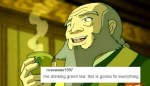
should uncle iroh be classed as a dilf or gilf. Discuss
wikipedia says he’s 65, which sounds like he’s on the cusp of gilfness. does anyone know the official dilf/gilf cutoff points. is it categorised by age alone or is it more like, a state of mind
Well if you want to go on a technicality, he can’t be a gilf, just a dilf. Because his son didn’t live long enough to have a kid of his own.
nah it’s not by your actual kids, that’s silly. especially because men can have kids (biologically) at any age. if you have your first kid at 90, you’re still a gilf. you just skipped out on the dilf stage.
like technically, he’s an uilf. but that’s just not a thing sadly
should uncle iroh be classed as a dilf or gilf. Discuss
wikipedia says he’s 65, which sounds like he’s on the cusp of gilfness. does anyone know the official dilf/gilf cutoff points. is it categorised by age alone or is it more like, a state of mind
should uncle iroh be classed as a dilf or gilf. Discuss
atla has the clearest demonstration of the emo/goth dichotomy of any piece of modern media, i think. we as an audience know that zuko and mai shouldn’t have ended up together, and this is because zuko (an emo) and mai (a goth) are so fundamentally different. in this essay, i will address th
While it is tempting to categorize Zuko as an emo, careful analysis reveals that he is actually a punk. While his constant angst is a symptom of an emo like nature, his lust for justice/ honor, his angry outbursts, and his teenage rebellion are far more in line with the subculture of punk. In my response, I will address th
Attempts by previous scholars to solidly categorize Zuko into either the emo or punk category are doomed to failure because they presuppose a sub-cultural dichotomy where none exists (though I do not debate that Mai is 100% goth). Instead, Zuko inhabits the emo-punk spectrum, with occasional forays into Fucking Nerd. Zuko’s character arc in ATLA can, in fact, be analyzed as the evolution of an Emo into a Punk through personal and external acceptance and love. In my analysis, I will explain how Zuko’s hair is symbolic of th
wait no fucking way “there is no war in ba sing se” is an anime thing? from avatar? i thought i t was a real thing like a quote from some Important Literature that i had never heard of that must have some sort of marxist importance but no it’s from a show about a kid with a pet buffalo

 🍓🧀 (archive)