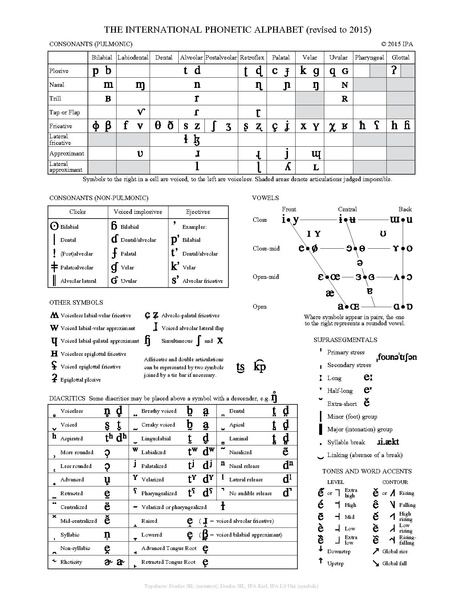
I present to you the
International Phonetic Alphabet (IPA). ( IPA website)
Basically this here is the cheat code for all pronunciation of every language
E v e r y. L a n g u a g e.
How?? Well, each symbol corresponds to one sound.
The table shows you where the sound is located and what your tongue has to do to pronounce that sound.
Example:
æ is said at the back of your throat while your throat is around halfway closed (indicated by its location relative to the words “open” and “front). This sound is found in
“back“ (in the Standard/General American dialect).
ŋ
is said by touching the base of your tongue to where the roof of your mouth gets soft (the velum) and exhaling through your noise while making noise (indicated by “velar” and “nasal”). This sound is found “song”.
As you can see, “ng” in “song” is made up of two letters that have different sounds while separate, but together they make a different sound. And English has some letters that correspond to several sounds all on their own! This is the case on many other languages, and trips up a lot of foreign language learners.
IPA ELIMINATES THIS DIFFICULTY BECAUSE EACH SYMBOL = 1 SOUND
lol sorry for all caps but im excited and this is important so
But how will this actually help you? Because dictionaries are amazing.
See that? That’s the entry for “language” in my Korean-English dictionary
(edited bc the previous picture had a pseudo-IPA and my sleep-deprived brain didn’t realize it until @korean-with-jangmi and
@gaybluecolson
pointed it out).
language -> ‘læŋgwɪdʒ
Pretty cool, right?
Here are some examples of IPA in action in different languages:
French: deux -> /dø/
Korean: 내가 -> /nɛ-ɡa/ or /ne-ga/
Afrikaans: seun -> /sɪøn/
Standard Arabic: عَيْن -> /ʕajn/
Ready to try this out for your own?
If you just want to only know how to pronounce your target language’s sounds:
Learn how to say the sounds in your TL by understanding the column/row titles that they are in on the IPA chart
(consonants here and vowels here)
Optional (or if you don’t have a dictionary):
Get the IPA charts for your target language (usually on its wikipedia page at “_target language_ Phonology”. If it’s not there then look up “_target
language_ IPA transcription”)
Example of IPA consonant and vowel charts (Afrikaans):
It’s a lot less intimidating when it’s the sounds for only one language, right?
REMEMBER: you don’t need to be able to pronounce every sound in IPA to make use of this chart, just know how to make them and what these symbols sound like (more or less) and your life of learning pronunciation will be so much easier
So there you have it:
The Secret to Perfect Pronunication in Any Language
Go, be free my language-learning friends, go pronounce things like natives!
and get rid of that nasty romanization for all my fellow korean learners
(oh
and if anyone has any questions about this, send em my way! i know
there are a couple linguistics blogs that follow me so if any of yall
wanna add smth, plz do!)
yall better reblog the heck outta this bc my hard work CANNOT go wasted ok?? i’ve been researching/writing/revising this for idk how long and my head hurts really bad asjdfsdg help
I present the
International Phonetic Alphabet (IPA). ( IPA website)
Basically this here is the cheat code for all pronunciation of every language
E v e r y. L a n g u a g e.
How?? Well, each symbol corresponds to one sound.
The table shows you where the sound is located and what your tongue has to do to pronounce that sound.
Example:
æ is said at the back of your throat while your throat is around halfway closed (indicated by its location relative to the words “open” and “front). This sound is found in
“back“ (in the Standard/General American dialect).
ŋ
is said by touching the base of your tongue to where the roof of your mouth gets soft (the velum) and exhaling through your noise while making noise (indicated by “velar” and “nasal”). This sound is found “song”.
As you can see, “ng” in “song” is made up of two letters that have different sounds while separate, but together they make a different sound. And English has some letters that correspond to several sounds all on their own! This is the case on many other languages, and trips up a lot of foreign language learners.
IPA ELIMINATES THIS DIFFICULTY BECAUSE EACH SYMBOL = 1 SOUND
lol sorry for all caps but im excited and this is important so
But how will this actually help you? Because dictionaries are amazing.
See that? That’s the entry for “language” in Merriam-Webster.
It shows two ways of pronouncing the word: ‘laŋ-gwij, and
’laŋ-wij, and indicates which syllable is stressed by putting a ‘ in front of the stressed syllable.
Pretty cool, right?
Here are some examples of IPA in action in different languages:
French: deux -> /dø/
Korean: 내가 -> /nɛ-ɡa/ or /ne-ga/
Afrikaans: seun -> /sɪøn/
Standard Arabic: عَيْن -> /ʕajn/
Ready to try this out for your own?
If you just want to only know how to pronounce your target language’s sounds:
Learn how to say the sounds in your TL by understanding the column/row titles that they are in on the IPA chart
(consonants here and vowels here)
Optional (or if you don’t have a dictionary):
Get the IPA charts for your target language (usually on its wikipedia page at “_target language_ Phonology”. If it’s not there then look up “_target
language_ IPA transcription”)
It’s a lot less intimidating when it’s the sounds for only one language, right?
REMEMBER: you don’t need to be able to pronounce every sound in IPA to make use of this chart, just know
how
to make them and what these symbols sound like (more or less) and your life of learning pronunciation will be so much easier
So there you have it:
The Secret to Perfect Pronunication in Any Language
Go, be free my language-learning friends, go pronounce things like natives!
and get rid of that nasty romanization for all my fellow korean learners
(oh
and if anyone has any questions about this, send em my way! i know
there are a couple linguistics blogs that follow me so if any of yall
wanna add smth, plz do!)
yall better reblog the heck outta this bc my hard work CANNOT go wasted ok?? i’ve been researching/writing/revising this for idk how long and my head hurts really bad asjdfsdg help
Using the IPA to learn languages helped me learn the Korean alphabet easily on my own and it streamlined the way I learned the Arabic alphabet, impressing my teacher. To the langblr blogs following me, I recommend searching for IPA resources to help you learn.
Quibble – that example from Merriam-Webster is not IPA. Many English dictionaries use their own, non-IPA phonetic symbols. Assuming they are IPA, and applying IPA values to them, will lead to egregious mispronunciations. For example, the IPA rendering of the last consonant in “language” is actually /dʒ/ and not /j/. Were I to assume those symbols were IPA, I might pronounce the word more like “long wee”. And nobody wants that.
You know, speakers of the Queen’s English throw a lot of shade at non-standard copulas and contractions for folks whose vernacular has historically included the word “’twasn’t”.
I love how most of the reblogs that are trying to come up with goofier variants actually manage to make the word less ridiculous than it really is.
(Hint: the apostrophe in a contraction goes where letters have been chopped off. It’s not “t’was” because there’s no missing letter in that position. The missing letter is at the beginning – “‘twas” and its various elaborations are contractions that start with an apostrophe.)
It kinda blew my mind to learn today that “thou” was actually an informal form, and “you/ye” was the fancy one
Now whenever I see “thou” I read it in a tone kinda like “y’all” in tumblr posts and like… 1600s bible verses were supposed to be perfectly frank, not stilted. this changes everything………..
“Listen, then, if y’all have ears!” – Jesus, maybe
This is the most incredible thing I’ve ever read. (Bonus twat points for being written by a climate change denier)
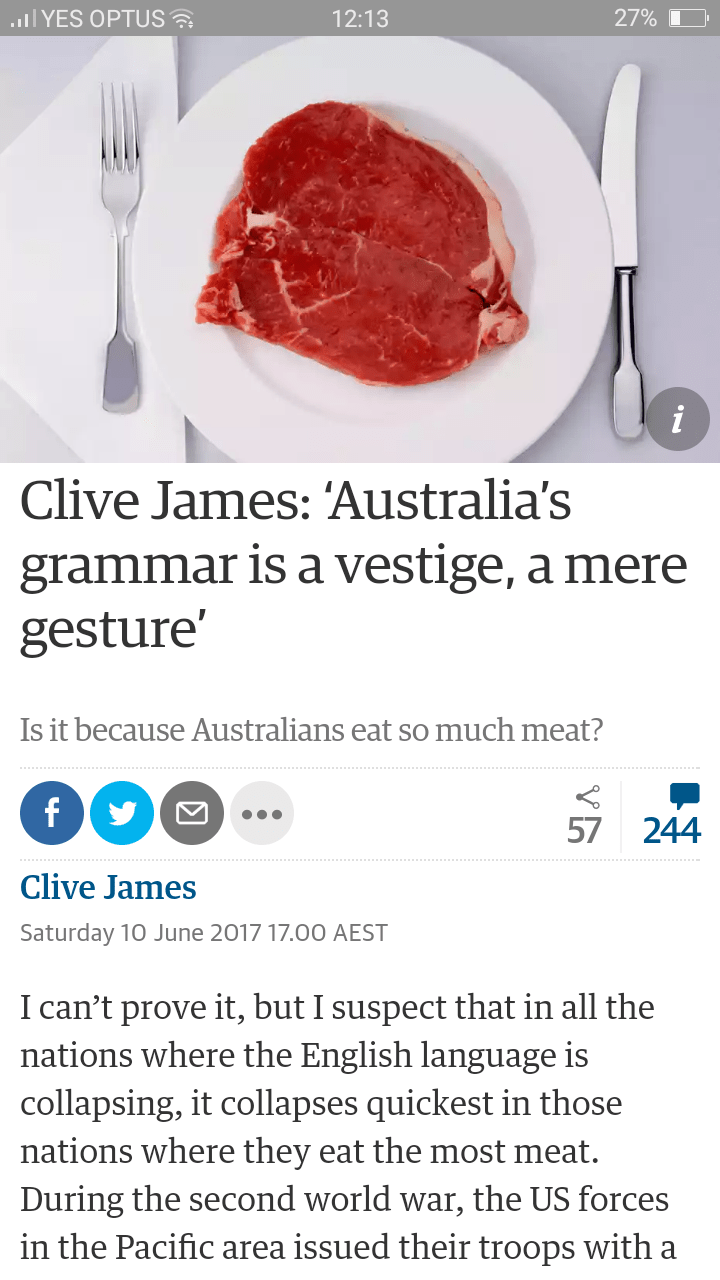
We normally decide how to pronounce an unfamiliar word by drawing analogies with English words we already know. For example, we knew how to pronounce “-ly” from words like “slowly,” so it isn’t too hard to figure out how to pronounce “bigly.”
But sometimes this approach runs into problems. In this case, there just aren’t any common English words ending in -efe. A wild-card search on the very comprehensive dictionary aggregator OneLook yielded the following list of words: jefe, fefe, efe, hefe, okeefe, hogrefe, keefe, reprefe, tefe and kefe. Pretty obscurefe.
So we have to search further afield. Maybe we go for the Spanish word “jefe,” meaning “boss.” Maybe we look to a different vowel, as in “fife” or “cafe.” Maybe we look to other spellings of the /f/ sound at the end of a word, like “ff” as in “fluff,” “gaffe” and “coiffe.”
The problem is that none of these is a close analogue, making it unsurprising that several Twitter polls have found that people are strongly split. But it looks like the lack of -fefe endings won’t remain true for long. People have started smashing covfefe together with other words to refer to the covfefe meme. There now exists the “threadfefe” (a thread about covfefe), an “exorfefe” (an exorcist of the word covfefe), a “presifefe” (president) and the slogan “If u think you’re above covfefe you’re part of the probfefe.”
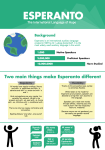
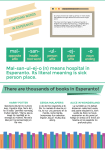
This infographic is about Esperanto, an international auxiliary language created in 1887 by Dr. Ludwig Zamenhoff. It is the most widely used constructed language in the world.
Alright everybody read the link above. I knew that Esperanto was very Eurocentric and actually quite bound by culture but yeah. This really is the ultimate response.
god this is the worst response I can’t believe i’m seeing it shared? it’s a mess. like there are serious problems with the sexism of the language that deserves it’s own article but it’s slotted in alongside petty rubbish like “i personally dislike letters with accents”. The author flops between saying the vocabulary could be smaller, and then decrying the use of affixes to keep the vocabulary small. Then he says it should get rid of the accusative case, and then points to languages with dozens of different cases that Esperanto should copy to get rid of prepositions, for some reason.
and i think he’s using a really outdated textbook? he says that some perfectly grammatical sentences are dissallowed, which looks more like personal taste. He asks if Esperanto has those correlatives, why doesn’t it have these ones? and then he lists a few words that do in fact appear in the language. He writes sentences in the longest, most stilted way and then says the grammar is inherently stilted, rather than it being the style of example sentences for learners.
there are actual problems in the language. The sexism: but the author of this doesn’t go into explaining the 1 to 15 words that have been proposed to fix the problem. the sexism is very, very easy to avoid in modern Esperanto and i feel like whoever wrote this should know by now. and parts are genuinely very difficult for some Asian speakers, like inflecting verbs for tense instead of using temporal adverbs. (which i have seen fixed in Esperanto Sen Fleksio, which is floating online somewhere, except I definitely agree there needs to be something Official to allow this in ‘proper’ speech)
i really need to make a proper counter to all his nitpicking and misinfo one day but, people who dislike Esperanto also need to make another essay. this is 10 years old and it’s still the only counter-esperanto essay i’ve been shown. if u want to discuss sexism and racism in a language, you start with that. you don’t harp on with “the alphabet doesn’t suit my taste” and “why don’t we stick to SVO word order” because it alienates anyone who likes the language and wants to actually fix it.




 🍓🧀 (archive)