How do you write healthy parent-child relationships?
this might be more response than you want, but interesting (and kinda depressing when you think about it) fact: there’ve been a bunch of research studies where parents have been asked what they think makes a healthy parent-child relationship, and they tend to like…not answer the actual question because they think they’re being asked what good parenting is, which is not the same. so they talk about things like helping kids with homework and making sure they eat well. children, on the other hand, usually respond to the same question with stuff that’s literally just the definition of healthy relationships generally. affection, honesty, respect, spending time together, sharing interests. and the real kicker is, objectively, we know that’s the kind of stuff that actually has a much better impact not only on whether or not the relationship is strong and positive but also the kid’s overall happiness and psychological health.
so, if you want to write a character who’s really intent on being a Good Parent you’d have them putting massive effort into making their kid Grow Up Right, worrying about shit like if they have The Right Friends and they’re spending Enough Time Outside. but if you want to write a good relationship, just make parent and kid laugh together and respect boundaries and be emotionally supportive, like you would when writing a solid pair of friends or romantic couple.
No that was actually really helpful and I’m glad you took the time to give a serious response
Idea: create a character. Make a memory box for that character. What would they put in it? What is important to them? Is it full of official documents? Do they have a secret?
the funniest #otherworldly trait concept i can imagine is
you when like. magical and nonhuman characters are described in a book and the protag like. hears the rustling of grass or smells woodsmoke inexplicably whenever they see them.
i’m just thinking about like. Wrong Versions of that.
every time someone sees me they inexplicably smell a shoe store which is like, not bad, I guess… they hear the distant and quiet but distinct sound of a lawn mower……
When I was in middle school, I found a chocolate-scented aroma oil that I dabbed on my clothing. The one time I went to a ‘Battle of the Bands’ type event, I wore it on a dark brown dress and near the end of the evening, this kid just turned to me and said, in obvious distress, “I don’t know why, but being around you makes me crave chocolate cake?!”
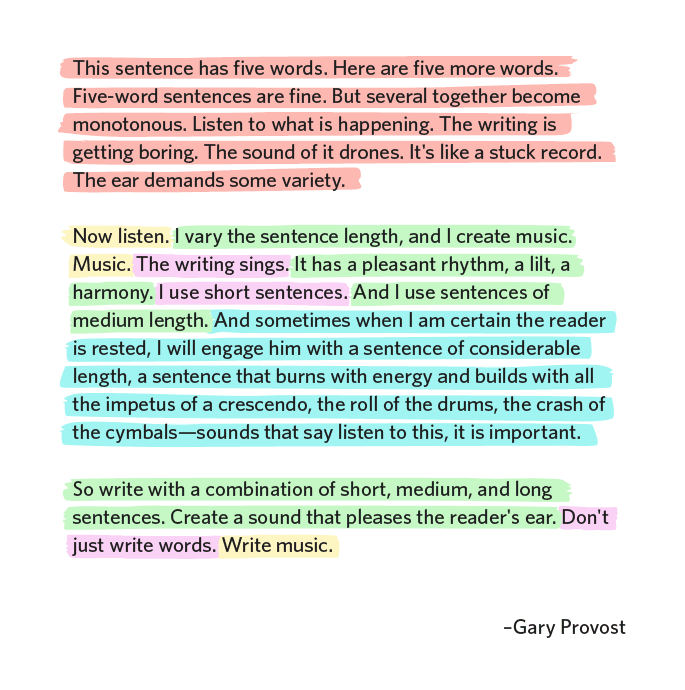
Guys this completely changed my writing, heed it. I often do an entire draft just looking at sentence variation and oftentimes the results are absolutely transformative in the difference.
It works this way with telling stories in images too. Varying the level of detail, scale, media from panel to panel in comics. Contrast. Contrast with an architecture to it. A music to it. Visually as well as with words.
I’ve been waiting for the perfect opportunity to explain this and show everybody my inverted pyramid 😀 😀 😀
I present, The Inverted Pyramid of Revising a Book
Now I’ll explain each section of the inverted pyramid:
THE FIRST DRAFT
This should be self-explanatory. You write the first draft. For novels, 75-150,000+ words of the world inside your head.
PLOT, CONTENT, SCENES, AND MAJOR CHARACTERS
Go back and fix it all up. Did you tell the story you wanted to tell? Did you include scenes and events that add up to the conclusion you present?
Are there any unnecessary scenes you could delete, or scenes that are redundant to other scenes? Get rid of them. If this means entire chapters have to go, wave bye-bye.
Do your main characters have believable back stories and arcs, and do they act appropriately in character at all times?
Is there any point in time when your characters do something that they literally WOULD NOT DO? Change that up.
WORLD-BUILDING, CHARACTERIZATION, HONING IN PLOT POINTS
Now pay attention to the deeper aspects of the story. Delve into the world your characters live in. Do they react appropriately? Does any part of society influence them more than others?
What does your world look like? Delve into the setting. The cultures, the technology, the history.
Work with your secondary characters and how they interact with your main characters. What role do they serve overall? Does the main character’s journey affect them at all, or vice versa?
Tighten up plot points. Stay concise if possible.
SENTENCE STRUCTURE, FLOW AND PACING OF SCENES
Now that the major parts of your story have been patted down, you can begin focusing on the technical stuff. Start broad.
Do you have redundant sentences? Do you start multiple sentences the same way?
Throw in short sentences.
Drop the pronoun from the beginning of a sentence every now and then.
Use commas instead of ‘and’ if you find you use ‘and’ a lot.
Does the flow of sentences and paragraphs fit with the tone of the scene?
Chop sentences apart. Use quick, sharp words.
Or combine sentences and flowery language and soft words.
BETA READER CRITIQUES AND SUGGESTIONS
Now that you’ve really patted this thing down, find people willing to read your work (hopefully for free).
Ask them to point out inconsistencies. Are they confused by anything?
Beta readers can tell you when things are boring or exciting. They’ll laugh. They’ll fangirl. They’ll beg you for more chapters.
Your brain is soft from so much revising. Beta readers are fresh, and will pick out things you’ve glossed over from seeing it so many times.
Shake things up and host a video chat for you and your betas! It’s a great way to make friends 🙂
PUNCTUATION AND MISSING WORDS
NOWWWWW you’ve finished all the major revisions and your story makes sense!!! All that’s left to do is get the broom and sweep it up (or the vacuum cleaner, or generate a black hole from the Large Hadron Collider to suck out all the errors because that’s super-effective**).
This is the nitty gritty stuff, and I highly recommend either forcing yourself to read really, really slow, or better yet, read your book out loud, start to finish.
You’ll trip up over misplaced commas and periods.
You’ll literally hear when a sentence is awkward.
Your brain will get confused when there’s a missing word.
Fill in the gaps, hammer down the boards, tidy up the place like you’ve got guests coming over.
THE FINAL DRAFT
OMG
OMG
OMG
OMG IT’S FINISHED AND YOU CAN SHARE IT WITH THE WORLD AND BUY PHYSICAL COPIES THAT YOU CAN HOLD AND SMELL AND RUB ALL OVER YOUR FACE AND DRAW IN AND DOG-EAR AND TOTE AROUND TO SHOW PEOPLE AND SIGN AUTOGRAPHS AND BECOME YOUR OWN LITTLE CELEBRITY!!!
Email the newspaper (I’ve appeared multiple times).
Email the local TV station (I’ve appeared on live TV).
Email book talk radio shows (I’ve had a Q&A for an hour on live radio).
……..Marketing is hard.
I hope that helps!
N.B. **please do not ask CERN for permission to use the Large Hadron Collider to create black holes that suck out all the errors in your book. You’ll look silly, and you might destroy Earth in the process.
“Wait a minute can they even do this they’re freaking cars”
You start to write something about ears or hands and then you remember like “…oh wait-”
getting anxious about putting human food in a scene so you just say oil to make it less conflicting
C A R H U G S …
“THEY’VE GESTURED WITH THEIR TIRES LIKE TEN TIMES ALREADY DO SOMETHING ELSE YOU STUPID VEHICLES LIKE I LOVE YOU BUT PLEASE MAKE IT EASIER FOR ME”
unsure about how to make a scene more dynamic cause the characters can really only just sit there talking to each other
“IS. LIGHTNING. MCQUEEN. OOC. I SWEAR HE’S OOC IN THIS SCENE”
Or, alternatively: “IS ANYONE IN-CHARACTER IN THIS SCENE OH GOD I DON’T KNOW THIS SERIES AT ALL DO I I’M HORRIBLE”
“wait do they even have windshield wipers”
“how far can they stretch their axles out like arms omg this must read so awkward”
when you have to write Mater’s dialogue and you start to say it out loud in the Larry the Cable Guy voice cause good God how do you write that voice properly (i.e. occasional horrid grammar and/or catchphrases)
*incoherent screaming about car anatomy*
“Okay would McQueen really cry here no he’d hold it in- but wait a second wouldn’t it be more powerful if he broke down here- alright listen up here-”
“OKAY IS IT THE ENGINE OR THE BATTERY THAT’S THE HEART I’M SO CONFUSED AND I’M THE ONE WRITING IT”
i’ve never been more baffled by any single post on this website and i’ve been here for four years
Cars fanfic is a thing which I both somehow knew must exist and at the same time was perfectly happy never acknowledging the existence of.
content-wise, this is the least relatable post i’ve seen in weeks
and yet somehow i feel like i ghostwrote it because op’s frustration at writing is universal
me writing dialogue: “what is man but a vessel through which a higher entity may see? what is his purpose? must he find a purpose? we are but stardust; the universe comprehending itself.”
me writing action: they ran real fast from the bad men aand legs hurty
me writing action: Her legs pounded against the earth, the familiar jolt grounding her like nothing else could. Magic, gods, royalty—she didn’t know anything about that. But running? That’s something she’d been doing since day one.
me writing dialogue: “I dunno man whatchu wanna do” “I dunno. What do you think?” “Hey man I don’t know”
me writing action: room go boom
me writing dialogue: noppity nope, that ain’t dope
“if it’s not plot relevant, cut it!!” is such awful writing advice
if JRR Tolkien had cut every bit of Lord of the Rings that wasn’t directly related to the central plot, it would have been just one book long, COLOURLESS and DULL AS DIRT.
all the little worldbuilding/character details are what draw you in and give the central plot weight, FOOL
The plot is not the same thing as the story. The plot is the mechanics of how one thing causes another.
Some classic stories have no plot to speak of – the characters just wander from one situation to the next. Alice in Wonderland and The Wizard of Oz are examples.
Some stories have partial plots, where some things in the story cause other things, but other things come out of the blue and pass away without consequence. This category includes classics too: Huckleberry Finn, The Wind in the Willows.
Even in stories with a strong plot, sometimes the most iconic moments fall outside that plot. Think of the No-Man’s-Land scene in Wonder Woman or the dying dinosaur in Jurassic World II.
Ah, but those aren’t classics, I hear someone say. Well, I disagree in the case of Wonder Woman (although time will tell), but let’s go right to the top of the English canon, Shakespeare’s Hamlet.
What’s the most iconic scene, if you had to pick one to illustrate for the front cover or the playbill poster? Ninety-nine times out of a hundred, it’s the Yorick skull scene. What does that have to do with the plot? Precious little. It’s just a way to keep Hamlet busy until Ophelia’s funeral arrives. And even there it’s not very well fit for purpose, because it doesn’t explain why Hamlet is hanging around in a graveyard anyway.
That’s because, tight though the plot of Hamlet is, the story of Hamlet is not reducible to its plot. Hamlet is a three-hour exploration of death and skulls and murder and corpses and funerals and ghosts and “what dreams may come”. The plot is just there to drive you around between the features of that mental landscape.
So the question isn’t “Does this serve the plot?” The question is “Does this help explore the idea that the story is about?”
(Why yes, I have written all this somewhere before.)
One really helpful thing I learned- and I can’t remember if it was from a writing class or a lit class, so I don’t even who to thank for it- is that each scene should move at least two or three aspects of what you’re writing forward.
That can be plot. It can be story.
It can be worldbuilding. It can be theme. It can be character. It can be relationships. It can be any number of things, but it needs to be more than one.
If a scene does nothing but move plot forward, it’s not accomplishing enough to earn its real estate on the page, any more than a scene that just builds character does.
When I look at it not as prioritizing plot, but as not prioritizing any one aspect of the story above all others, it makes it easier for me to figure out what strengthens my writing and what doesn’t, or,at the very least, how to make a scene that’s important to me more useful to the story as a whole.
One thing I remember from my Poetry course specifically was that you should try to recite it back to yourself, and any parts you couldn’t remember well you should consider rewording, because if they didn’t stick in YOUR head as the person who wrote them (and rewrote them, and puzzled over them, and rewrote them again…), they likely weren’t gonna stick in someone else’s head.
This doesn’t work as well for prose pieces longer than a short story obviously, although I guess it depends on the individual person and the individual piece.
For the plot aspect, maybe try to do a quick outline from memory of what happens in the piece (at least in your latest draft) and see if there’s anything you can’t remember clearly or explain in a couple short bullet points.
For the prose aspect, maybe take a section or chapter and try writing or typing it out from memory. Even just a difficult paragraph or passage. Anywhere your brain gets stuck or keeps trying to switch the words around probably needs rewording or deleting.
Worldbuilding…idk, maybe try, without checking your notes, to write out a historical timeline, draw a map, and/or make a list of important characters and places. Anything you might include with the piece or put on a website about it to help readers keep track of everything. Rules of magic, family trees, etc. You might notice stuff that’s confusing (like characters whose names start with the same letter SORRY THAT’S JUST A PET PEEVE AND ALWAYS THROWS ME OFF NEVER HAVE BOTH A MATT AND A MARK AT THE SAME TIME I’M BEGGING YOU) or you might notice places where you’ve neglected info. Maybe take some element (person, place, event, language, song, idk) and list from memory a few ways that element is important/relevant to the world, and which other elements it relates to?
Idk for all the Tolkien I read, worldbuilding isn’t my specialty. You do you I guess.
Consider taking a couple days off working on your piece (mb work on another piece to keep up your work ethic tho) before doing this, so it’s not all fresh in your head. That’s a good thing to do every now and then before an editing session anyway, so you can see it with fresh eyes.
Ofc this is all just spitballing to take that advice from poetry and expand it to prose. Shrug!
Write more than one bi character in the same story. It’s dangerous to let a single character represent All Bisexuals Everywhere™. (Same with any other character who belongs to a specific minority group.)
Does one character fall into the ‘bisexuals sleep around’ stereotype, but it feels true to who they are, so you want to keep it that way? Add another bisexual character who doesn’t sleep around.
Does one female bisexual character end up with a man, frustrating your wlw audience? Add another prominent bi woman who ends up in a sapphic relationship.
Have two bisexuals. Have three. Have twenty! Give them different gender identities, racial identities, body types, backgrounds. Real life bisexuals are all over the map, so why should you have only one?

 🍓🧀 (archive)